- Home
- Floppy Disks
- Floppy Disk Storage
Floppy Disk Storage
Proper floppy disk storage will keep your diskettes in good condition and help extend the life of your floppy disks. The recommendations for proper storage and handling are quite straightforward and easy to follow. There is no specific standard that relates to the storage of floppy diskettes as there is for hard drives.
Floppy Disk Storage Container
First, when the floppy disks are not being used they should be removed from the drive and stored in their paper or Tyvek sleeve. Sleeves are used for 8 inch and 5.25-inch floppy disk formats to prevent the contamination of the disk surfaces through the openings in the protective jacket. Two examples of these types of sleeves are illustrated in the following photograph.
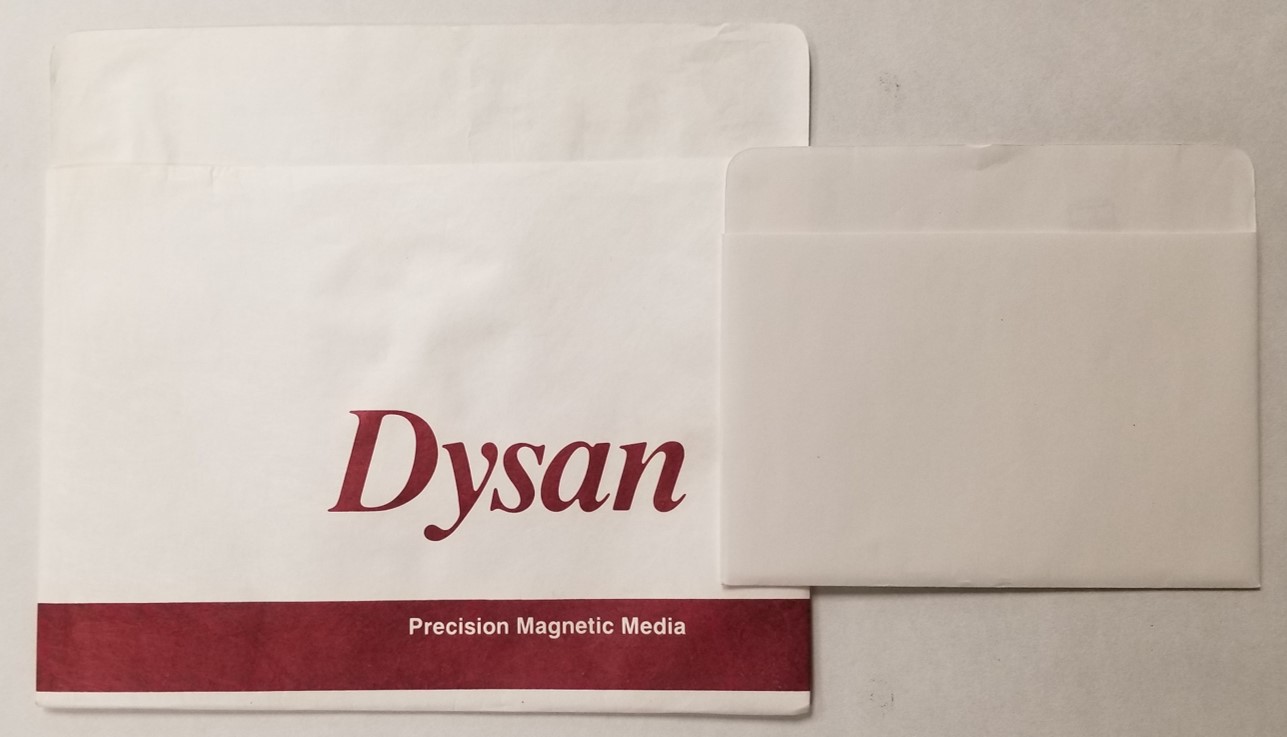
The 3.5-inch format usually does not come with a sleeve nor does it require a sleeve since the jacket provides better protection for the disk.
For proper floppy disk storage, it is a good idea to keep the diskettes in a plastic storage box that allows the disks to be stored vertically or at least not flat. An example of a smaller box for 3.5-inch floppy disks is shown in the following image.
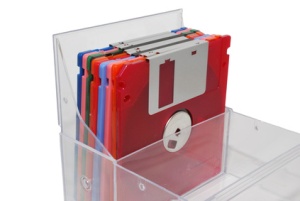
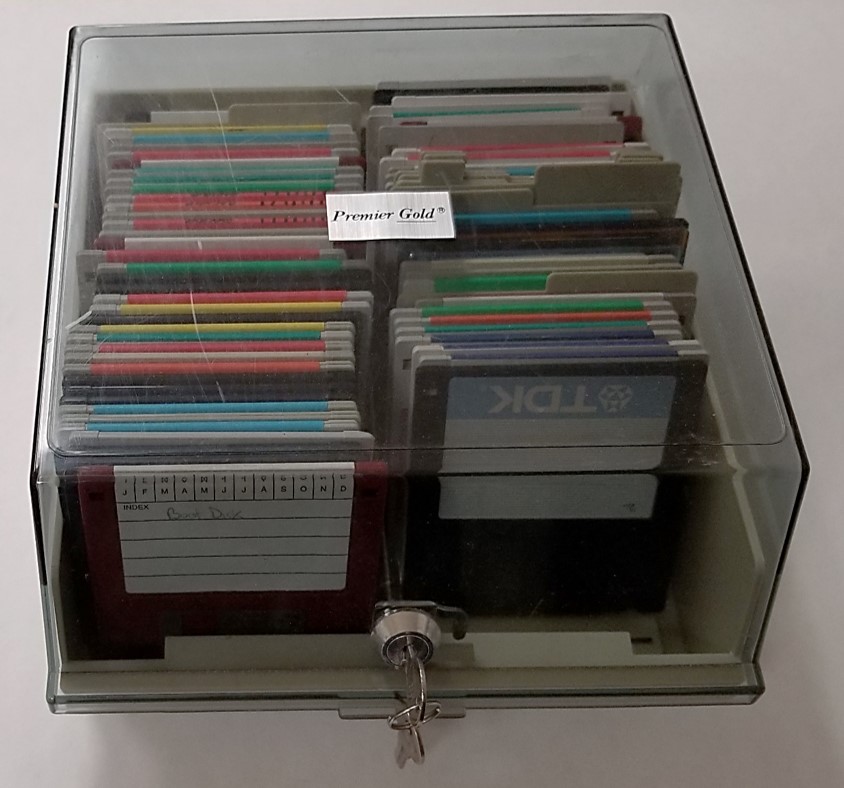
This disk storage box provides physical protection for the disks and prevents debris from coming in contact with the floppies. An example of larger storage box for 3.5-inch diskettes is shown below. This box has the additional feature of a lock for a bit of security. Similar boxes are available for the 8-inch and 5.25-inch floppies.
Ensure Storage Area is Clean
An important aspect of floppy disk storage is to ensure the floppy storage area is clean and this applies to the use area as well. Diskettes should be handled in clean and debris free areas. No eating or drinking should occur in areas where diskettes are handled and used. If debris is present on a disk when it is read, the disk and/or magnetic heads in the drive can be damaged.
Avoid Touching Disk Surface
Never touch the floppy disk surface as this will contaminate it and lead to read errors. Restoration of the disk would require cleaning, which may irreversibly damage the floppy and lead to the loss of information.
Avoid Magnetic Fields
Magnetic fields can be problem, but usually only if a strong magnet is placed up close to the diskette. The strength of magnetic fields, even strong ones, falls off quickly with distance as shown in the graph.
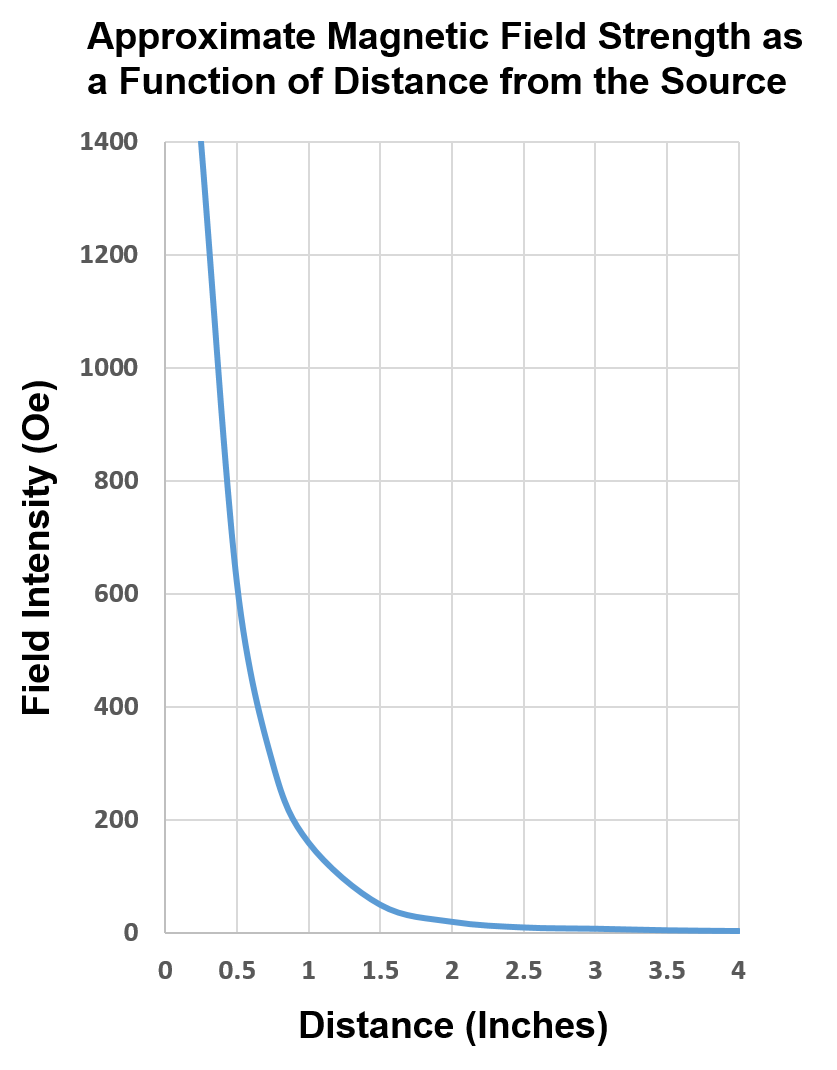
The low end of coercivity for floppy disks is about 300 Oersteds (Oe) and this is found in the 8-inch and some 5.25-inch disks. Many 5.25-inch and all 3.5-inch diskettes have a coercivity value of 600 or higher. In order to erase a disk, the magnetic field needs to be higher than the coercivity value of the magnetic particles in the media. By observing the graph, a one inch separation lowers a strong magnetic field to a coercivity value than is below 300. Generally, the recommendation for floppy disk storage is to keep magnetic based storage media at least 2 to 3 inches away from a magnetic source to ensure no erasing of information occurs.
Temperature and Relative Humidity Storage Conditions
In terms of temperature and relative humidity for floppy disk storage, standard office type temperature and relative humidity are satisfactory. This normally results in a floppy disk lifetime of 5 to 15 years. If the floppies are stored in cooler and drier conditions then the lifetime range can increase significantly.
The health and longevity of the disk media is not the only factor that determines whether you will have access to the stored digital information into the future. Another important factor is the availability of drives to read the media. If there are no drives, then the information cannot be extracted from the media. This is certainly a problem with the 8-inch and 5.25-inch floppy disk formats. This is also starting to occur with the 3.5-inch format.
One solution to this problem would be to keep the original drives, software, and computers and operating systems to run the drives in storage with the media. However, this approach will likely only work for a short period because the computers and/or drives will eventually fail. A better solution to preserve the information stored on a floppy disk is to transfer the information from the floppy to a more modern carrier such as a CD, DVD, or hard disk.